Electric bikes are no longer a luxury gadget. They’ve become a smart commuting solution, a weekend adventure companion, and even a serious fitness tool. But if you’re shopping for one, you’ve likely faced the big question:
Should you invest in a premium e-bike, or is a mid-range electric bike good enough?
In this detailed guide, we’ll break down the real differences between premium vs mid-range e-bikes, covering performance, battery life, durability, long-term value, and overall riding experience. By the end, you’ll know exactly which option fits your budget and lifestyle.
Understanding the Difference Between Premium and Mid-Range E-Bikes
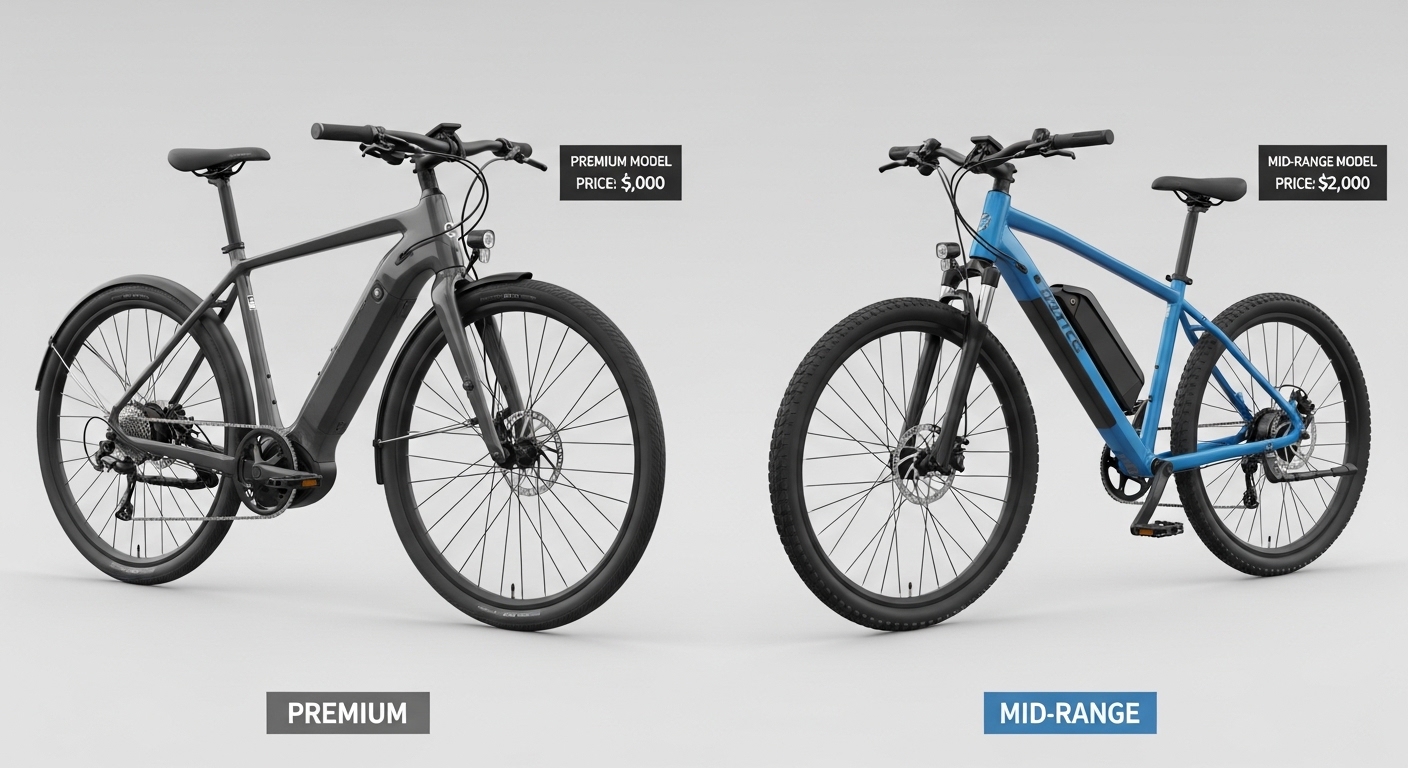
Before deciding whether the upgrade is worth it, let’s define what separates these two categories.
What Is a Mid-Range E-Bike?
A mid-range electric bike typically costs between $1,200 and $2,500. These bikes are designed for:
-
Daily commuting
-
Light trail riding
-
Urban transportation
-
Weekend recreational use
They offer solid performance, decent battery life, and reliable components without the high-end price tag.
What Is a Premium E-Bike?
A premium e-bike usually starts around $3,000 and can exceed $6,000 or more. These bikes are built with:
-
High-torque mid-drive motors
-
Extended-range lithium-ion batteries
-
Advanced suspension systems
-
Lightweight aluminum or carbon fiber frames
-
Integrated smart displays and app connectivity
Premium models focus on performance, comfort, and long-term durability.
Performance Comparison: Power and Ride Quality
Performance is often the biggest reason riders consider upgrading.
Motor Power and Torque
Premium e-bikes often feature:
-
Higher torque output (better hill climbing)
-
Smoother pedal-assist transitions
-
More responsive acceleration
Mid-range models still offer strong performance, but you may notice:
-
Slight delay in pedal assist
-
Lower torque for steep inclines
-
Less refined power delivery
If you frequently ride in hilly areas or carry cargo, the difference becomes more noticeable.
Battery Life and Range: Does Premium Last Longer?
Battery performance directly affects your daily riding experience.
Mid-Range Battery Range
Most mid-range e-bikes provide:
-
30–60 miles per charge
-
Standard lithium-ion battery packs
-
Moderate charging times
This is more than enough for commuting and casual rides.
Premium Battery Technology
Premium models often include:
-
Extended battery capacity (60–100+ miles)
-
Faster charging systems
-
Smarter battery management systems
If you rely on your e-bike for long-distance commuting or delivery services, a long-range electric bike may justify the higher cost.
Build Quality and Components
This is where premium models really stand out.
Frame and Materials
Premium e-bikes may include:
-
Carbon fiber frames
-
Hydroformed aluminum
-
Internal cable routing
-
Integrated lighting systems
Mid-range bikes typically use standard aluminum frames, which are durable but heavier.
Braking and Suspension Systems
Premium bikes often feature:
-
Hydraulic disc brakes with better stopping power
-
Adjustable air suspension forks
-
High-performance drivetrains
Mid-range models may use:
-
Mechanical disc brakes
-
Basic front suspension
-
Entry-level drivetrain components
If you ride off-road or at higher speeds, better components improve both safety and comfort.
Comfort and Ride Experience
Comfort matters more than many people expect.
Premium e-bikes usually offer:
-
Ergonomic grips and saddles
-
Suspension seat posts
-
Smoother pedal assist tuning
-
Quieter motors
Mid-range bikes are comfortable, but premium models often feel more refined and effortless.
If you ride daily for 45+ minutes, that refinement adds up.
Smart Features and Technology
Modern electric bikes now include advanced tech features.
Premium E-Bike Technology
-
Bluetooth connectivity
-
Mobile app tracking
-
GPS theft protection
-
Integrated LCD displays
-
Customizable ride modes
These features appeal to tech-savvy riders and commuters.
Mid-range e-bikes often provide:
-
Basic LED or LCD displays
-
Standard pedal assist levels
-
Minimal app integration
If you value data tracking and connectivity, premium bikes offer more innovation.
Cost Analysis: Is the Upgrade Worth the Money?
Let’s talk about numbers.
Upfront Cost
-
Mid-range: $1,200–$2,500
-
Premium: $3,000–$6,000+
The difference can easily be $2,000 or more.
Long-Term Value
Here’s where it gets interesting.
Premium e-bikes often:
-
Last longer due to higher-quality components
-
Require fewer repairs
-
Maintain better resale value
Mid-range bikes may:
-
Need part replacements sooner
-
Experience faster battery degradation
-
Have lower resale prices
If you ride daily for years, the total cost of ownership might not be as different as the upfront price suggests.
Who Should Choose a Mid-Range E-Bike?
A mid-range model is ideal if you:
-
Are new to electric bikes
-
Ride less than 20 miles per day
-
Mostly commute on flat roads
-
Want affordable electric transportation
-
Need a budget-friendly e-bike
For many riders, mid-range offers the best balance between cost and performance.
Who Should Upgrade to a Premium E-Bike?
A premium e-bike makes sense if you:
-
Ride long distances daily
-
Tackle steep hills regularly
-
Want advanced features and smart tech
-
Care about lightweight design
-
Value long-term durability
If your e-bike replaces a car for commuting, investing in a high-performance electric bike can be financially logical over time.
Hidden Costs to Consider
When comparing premium vs mid-range e-bikes, don’t forget:
-
Replacement battery cost
-
Maintenance and service fees
-
Insurance
-
Accessories (helmets, locks, racks)
Premium bikes may cost more upfront, but sometimes offer better warranties and component longevity.
Real-World Example: Commuter vs Weekend Rider
Let’s simplify the decision.
Scenario 1: Daily Urban Commuter
-
15–25 miles per day
-
Mixed terrain
-
Year-round riding
A premium model may provide better comfort, reliability, and battery range.
Scenario 2: Weekend Casual Rider
-
10–15 miles once or twice weekly
-
Mostly flat terrain
A mid-range electric bike is more than sufficient.
Pros and Cons Summary
Mid-Range E-Bike
Pros
-
Affordable price
-
Good performance
-
Ideal for beginners
-
Lower financial risk
Cons
-
Heavier frame
-
Fewer smart features
-
Lower resale value
Premium E-Bike
Pros
-
Higher torque and performance
-
Longer battery range
-
Advanced technology
-
Better ride comfort
-
Higher resale value
Cons
-
Higher upfront cost
-
May be unnecessary for casual riders
Is the Upgrade Worth It?
The answer depends on how you use your bike.
If you’re riding occasionally for fun, a mid-range model offers excellent value. But if your e-bike is your primary transportation, upgrading to a premium option may deliver:
-
Greater reliability
-
Longer lifespan
-
Superior performance
-
Better long-term savings
Think of it this way: upgrading makes sense when your e-bike becomes a daily essential, not just a weekend hobby.
Choosing the Right E-Bike for Your Lifestyle
When comparing premium vs mid-range e-bikes, there’s no universal winner. The best choice depends on your:
-
Budget
-
Riding frequency
-
Terrain
-
Long-term goals
If you want affordable electric commuting with solid performance, mid-range models are an excellent choice. If you prioritize top-tier performance, cutting-edge features, and long-term durability, premium e-bikes can absolutely be worth the investment.
Before buying, consider test riding both categories and calculating your total cost of ownership. The right decision is the one that fits your real-world needs.
FAQ
1. Are premium e-bikes faster than mid-range models?
Not necessarily in top speed, but premium e-bikes often provide smoother acceleration and higher torque for hills.
2. How long do e-bike batteries last?
Most lithium-ion batteries last 3–5 years or 500–1,000 charge cycles, depending on usage and maintenance.
3. Is a mid-range e-bike good for daily commuting?
Yes, especially for short to moderate commutes on relatively flat terrain.
4. Do premium e-bikes require less maintenance?
They often use higher-quality components, which may reduce maintenance frequency over time.
5. Can I upgrade parts on a mid-range e-bike later?
Yes, many components like brakes, tires, and saddles can be upgraded, but motor and frame limitations remain.