Electric bikes are transforming the way people commute, travel, and explore. But while motors and frames often get the spotlight, the real heart of any eBike is its battery. Choosing the right electric bike battery can make the difference between smooth, reliable rides and constant range anxiety.
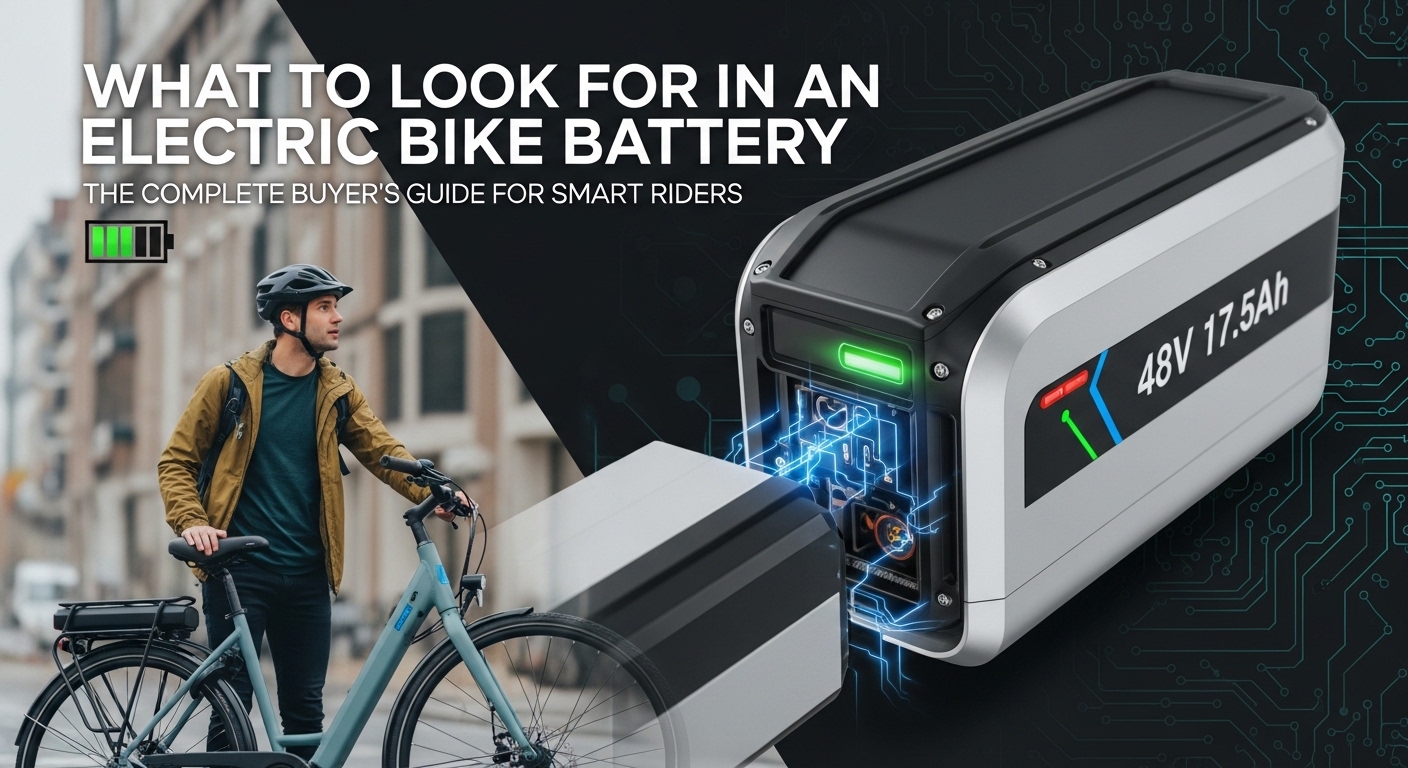
In this complete guide, you’ll learn exactly what to look for in an electric bike battery, how to compare options, and how to make a smart investment that lasts for years.
Why the Electric Bike Battery Matters So Much
Your battery determines:
-
How far you can ride on a single charge
-
How powerful your motor feels
-
How long your eBike will last
-
How much you’ll spend on long-term maintenance
If you’re researching the best electric bike battery for commuting or comparing long range eBike battery options, understanding the basics will help you avoid costly mistakes.
Battery Capacity (Ah & Wh) – The Key to Range
When comparing electric bike batteries, the first thing you’ll see is capacity. This is usually shown in:
-
Amp-hours (Ah)
-
Watt-hours (Wh)
What Is Watt-Hour (Wh)?
Watt-hours measure how much energy the battery can store. In simple terms:
The higher the Wh, the longer your potential riding range.
For example:
-
250Wh → Suitable for short city rides
-
400–500Wh → Ideal for daily commuting
-
600Wh+ → Great for long-distance riders or hilly areas
If you’re searching for a high capacity electric bike battery, focus on Wh rather than just Ah. Watt-hours give a clearer picture of real-world range.
Estimated Range Guide
Although many factors affect range (terrain, rider weight, assist level), here’s a rough idea:
-
250Wh: 20–40 km
-
500Wh: 40–80 km
-
750Wh: 60–120 km
Always check realistic range claims, not just maximum lab-tested numbers.
Battery Voltage – Power and Performance
Voltage (V) impacts how much power your motor can deliver.
Common eBike battery voltages include:
-
36V
-
48V
-
52V
Which Voltage Should You Choose?
-
36V: Standard for city commuting
-
48V: Better torque and hill climbing
-
52V: Higher performance and stronger acceleration
If you frequently ride uphill or carry cargo, a higher voltage battery can improve performance significantly.
When looking at electric bike battery upgrade options, make sure the voltage matches your motor and controller to avoid compatibility issues.
Battery Chemistry – Why Lithium-Ion Is the Standard
Today, almost all quality eBikes use lithium-ion batteries. They are:
-
Lightweight
-
Energy-dense
-
Long-lasting
-
Faster charging
Older battery types like lead-acid are heavier and less efficient. For modern riders, lithium-ion is the safest and smartest choice.
If you’re researching affordable lithium eBike batteries, prioritize certified products that meet safety standards rather than the cheapest option available.
Battery Lifespan and Charge Cycles
A common question is: How long does an electric bike battery last?
Most quality lithium-ion batteries last:
-
500 to 1,000 full charge cycles
-
Around 3 to 5 years with proper care
What Is a Charge Cycle?
One charge cycle equals:
-
0% → 100% (full charge)
Partial charges add up over time. For example:
-
50% → 100% twice = 1 full cycle
If you want a long lasting electric bike battery, check the manufacturer’s cycle rating before buying.
Charging Time and Smart Charging Features
Charging time depends on:
-
Battery capacity
-
Charger output (amps)
Typical charging times:
-
3–4 hours (smaller batteries)
-
5–7 hours (larger batteries)
Some advanced systems include:
-
Smart battery management systems (BMS)
-
Overcharge protection
-
Temperature monitoring
-
Short circuit protection
These safety features are especially important if you store your bike indoors.
Removable vs Integrated Batteries
Modern eBikes come with two main battery styles:
1. Removable Batteries
-
Easy to charge indoors
-
Convenient for apartment living
-
Easier to replace
2. Integrated (Built-In) Batteries
-
Sleeker design
-
Better frame protection
-
Improved weather resistance
If you live in an apartment or shared building, a removable battery may be more practical.
Weight and Placement
Battery weight affects bike handling.
Heavier batteries:
-
Improve range
-
May reduce agility
Placement also matters:
-
Down tube mounting → Balanced and stable
-
Rear rack mounting → Can affect handling
For daily commuting, a centrally mounted battery usually offers the best riding experience.
Safety Certifications and Build Quality
Battery safety should never be overlooked.
When choosing an electric bike battery, look for:
-
Certified manufacturing standards
-
Built-in Battery Management System (BMS)
-
Thermal protection
-
Waterproof casing
Avoid extremely cheap, unverified batteries. Saving money upfront can lead to serious safety risks.
If you’re comparing electric bike battery replacement cost, consider durability and safety over price alone.
Weather Resistance and Climate Compatibility
If you ride in rain or hot climates, battery durability matters.
Look for:
-
Water-resistant casing
-
Operating temperature range
-
Proper sealing against dust
Extreme heat and cold can reduce battery efficiency, so storing your battery indoors during harsh weather helps extend its lifespan.
Warranty and After-Sales Support
A reliable battery should come with:
-
At least 1–2 years warranty
-
Clear replacement policy
-
Accessible customer support
When investing in a premium electric bike battery pack, warranty coverage gives peace of mind.
Cost vs Value – What Should You Expect to Pay?
Electric bike battery prices vary depending on capacity and quality.
Approximate price ranges:
-
Entry-level: Lower capacity, basic protection
-
Mid-range: Balanced performance and safety
-
High-end: High capacity, smart management systems
Instead of choosing the cheapest option, evaluate:
-
Cost per watt-hour
-
Expected lifespan
-
Warranty coverage
A slightly higher upfront investment often saves money long term.
Quick Checklist Before Buying
Use this checklist when shopping:
-
Check watt-hours (Wh) for range
-
Confirm voltage compatibility
-
Verify lithium-ion chemistry
-
Look for 500+ charge cycles
-
Ensure safety features (BMS, thermal protection)
-
Check warranty coverage
-
Confirm removable or integrated design
H2: How to Extend Your Electric Bike Battery Life
Proper care can significantly extend battery performance.
Follow these tips:
-
Avoid draining to 0% frequently
-
Store at 40–80% charge if unused
-
Keep away from extreme heat
-
Use the original charger
-
Avoid overcharging overnight regularly
Good maintenance can add years to your battery’s usable life.
Choose Smart, Ride Longer
Your electric bike battery is more than just a power source — it’s the foundation of your entire riding experience. By focusing on watt-hours, voltage, lifespan, safety features, and warranty coverage, you can confidently choose a battery that fits your riding style and budget.
Whether you’re a daily commuter or weekend explorer, investing in the right electric bike battery ensures longer rides, better performance, and fewer headaches.
If you found this guide helpful, feel free to share your experience or ask questions in the comments. Smart riders make informed decisions — and now, so can you.
FAQ: What to Look for in an Electric Bike Battery
1. What size battery is best for an electric bike?
A 400–500Wh battery is ideal for most commuters. Long-distance riders may prefer 600Wh or more.
2. How many years does an electric bike battery last?
Most lithium-ion batteries last 3 to 5 years, depending on usage and maintenance.
3. Can I upgrade my electric bike battery?
Yes, but you must match voltage and ensure compatibility with your motor and controller.
4. Is a higher voltage battery better?
Higher voltage provides more power and torque, especially useful for hills and heavy loads.
5. How much does an electric bike battery replacement cost?
Costs vary based on capacity and quality, but higher-quality batteries typically offer better long-term value.