An electric bike is more than just a way to get around — it’s an investment in convenience, fitness, and eco-friendly transportation. But like any valuable equipment, your e-bike needs proper care. Knowing how to clean and store your e-bike properly can extend battery life, protect the motor, and prevent expensive repairs.
In this complete guide, you’ll learn practical, beginner-friendly steps for e-bike cleaning and storage. Whether you ride daily or seasonally, these tips will help you maintain performance, improve safety, and reduce long-term electric bike maintenance costs.
Why Proper E-Bike Cleaning and Storage Matters
Electric bikes contain sensitive electronic components that traditional bikes don’t have. Improper washing or storage can lead to:
-
Reduced battery lifespan
-
Motor corrosion
-
Rusted drivetrain components
-
Expensive controller repairs
-
Voided warranties
Preventive maintenance is far cheaper than replacing an e-bike battery or motor. A quality battery replacement can be costly, which makes e-bike battery care tips essential for every rider.
How to Clean Your E-Bike Safely
Cleaning an electric bike requires more care than cleaning a regular bicycle. Water and electronics don’t mix well, so follow these steps carefully.
Step 1: Power Off and Remove the Battery
Before doing anything:
-
Turn off the e-bike completely.
-
Remove the battery if possible.
-
Cover exposed electrical contacts with a dry cloth.
This protects sensitive components and ensures safe electric bike cleaning.
Step 2: Use the Right Cleaning Tools
Avoid pressure washers. High-pressure water can damage motor seals and electrical wiring.
Instead, use:
-
A bucket of warm water
-
Mild bike-specific cleaner
-
Soft sponge or microfiber cloth
-
Soft brush for chain and cassette
-
Low-pressure hose (optional)
Using gentle tools prevents damage to your electric bike motor system.
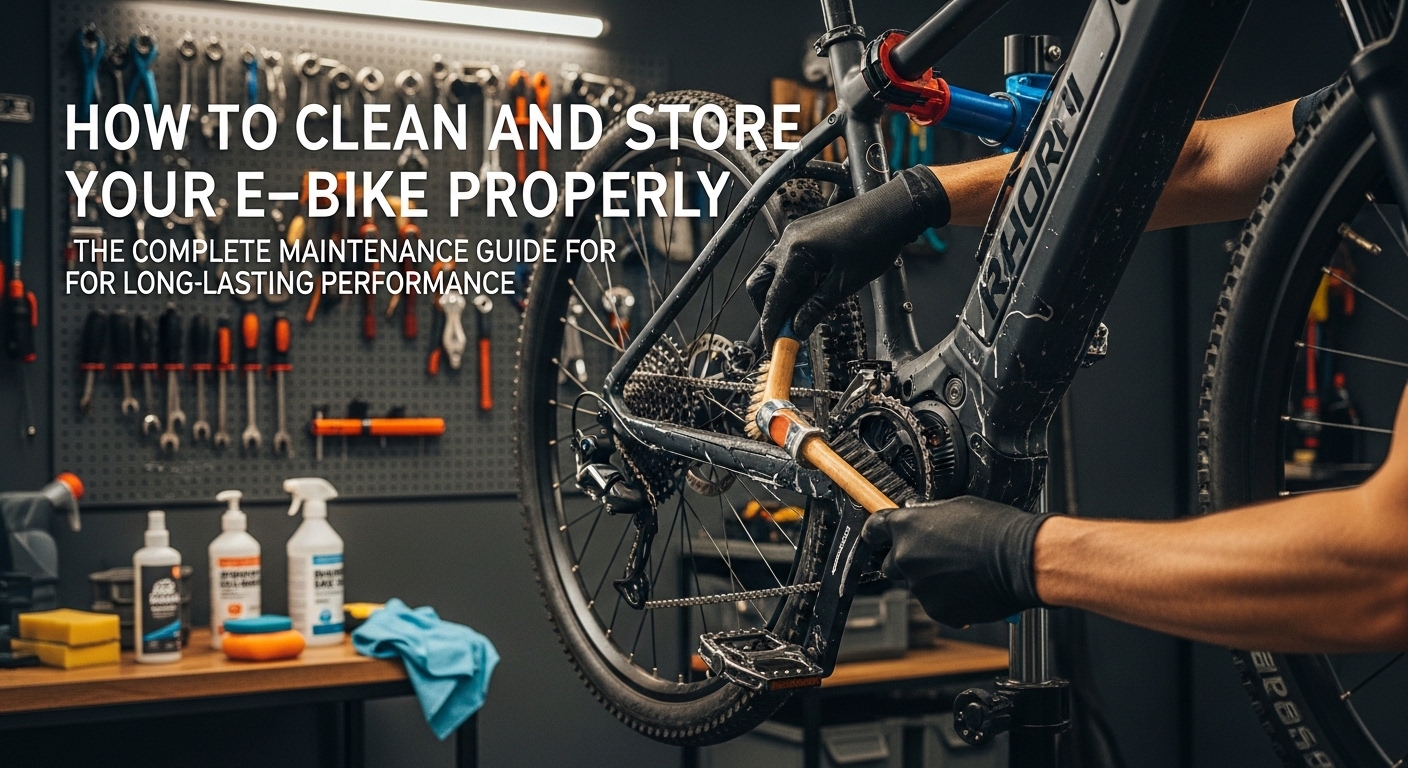
Step 3: Clean the Frame and Components
Follow this order for best results:
Frame Cleaning
-
Wipe down the frame with a damp sponge.
-
Avoid spraying water directly at the motor or display.
-
Pay attention to dirt buildup near cable entries.
Drivetrain Cleaning
The drivetrain collects the most dirt.
-
Apply degreaser to the chain.
-
Scrub gently with a chain brush.
-
Wipe clean with a dry cloth.
-
Lubricate once fully dry.
Proper chain care reduces friction and improves e-bike performance efficiency.
Step 4: Clean the Brakes Carefully
If your bike has disc brakes:
-
Avoid touching brake rotors with oily hands.
-
Use alcohol-based cleaner for rotors if needed.
-
Keep lubricant away from braking surfaces.
Brake contamination can reduce stopping power and compromise safety.
Step 5: Dry Thoroughly
Never store your e-bike while wet.
-
Use a microfiber towel to dry all surfaces.
-
Let it air-dry for 30–60 minutes.
-
Reinstall the battery only after the bike is fully dry.
Moisture trapped inside connectors can cause long-term electrical issues.
E-Bike Battery Care Tips
Your battery is the most expensive component of your e-bike. Proper storage and cleaning habits protect your investment.
How to Clean the Battery
-
Wipe the battery casing with a slightly damp cloth.
-
Never submerge it in water.
-
Clean the terminals gently with a dry cloth.
Ideal Battery Storage Conditions
If you’re storing your e-bike for weeks or months:
-
Keep the battery at 40%–70% charge.
-
Store in a cool, dry place (50–77°F / 10–25°C).
-
Avoid extreme heat or freezing temperatures.
These steps improve electric bike battery lifespan and reduce degradation.
How to Store Your E-Bike Properly
Seasonal storage is common, especially during winter or long travel periods. Proper storage prevents corrosion and battery damage.
Choose the Right Storage Location
Ideal storage space should be:
-
Dry
-
Climate-controlled
-
Away from direct sunlight
-
Protected from humidity
Avoid damp basements or outdoor sheds without insulation.
Indoor storage helps prevent rust and protects the e-bike electrical system maintenance.
Prepare the Tires
Long-term storage can flatten tires.
-
Inflate tires to recommended PSI.
-
If possible, use a bike stand to lift wheels off the ground.
-
Rotate wheels occasionally during storage.
This prevents tire cracking and uneven wear.
Protect the Chain and Moving Parts
Before storing:
-
Clean and lubricate the chain.
-
Apply a light protective spray on metal components.
-
Avoid over-lubrication.
This prevents rust buildup during inactivity.
Cover Your E-Bike
Use a breathable bike cover — not plastic wrap.
A proper cover:
-
Prevents dust buildup
-
Reduces moisture exposure
-
Protects from accidental scratches
This small step reduces future cleaning effort.
Monthly Maintenance Checklist During Storage
Even if not riding, check your e-bike once per month:
-
Inspect battery charge level
-
Spin wheels briefly
-
Check for rust or moisture
-
Recharge battery if below 30%
Routine checks prevent costly repairs and support long-term electric bike service cost savings.
Common Mistakes to Avoid
Avoid these common cleaning and storage errors:
-
Using pressure washers
-
Charging battery in extreme temperatures
-
Storing battery fully discharged
-
Spraying water directly at motor
-
Ignoring chain lubrication
-
Leaving bike outdoors uncovered
Small mistakes can shorten the life of your e-bike significantly.
Seasonal E-Bike Storage Tips
Winter Storage
Cold temperatures affect lithium-ion batteries.
-
Remove and store battery indoors.
-
Keep storage temperature stable.
-
Avoid charging below freezing temperatures.
Summer Storage
High heat accelerates battery degradation.
-
Store in shaded indoor area.
-
Avoid garages without ventilation.
-
Never leave battery inside a hot car.
How Proper Maintenance Saves Money
Regular cleaning and storage help you avoid:
-
Battery replacement costs
-
Motor repair expenses
-
Controller replacement
-
Corrosion-related damage
By following these electric bike maintenance tips, you protect your investment and maintain resale value.
Conclusion
Knowing how to clean and store your e-bike properly is one of the smartest things you can do as an owner. With just a little time and attention, you can protect your battery, motor, drivetrain, and overall performance.
To recap:
-
Always power off and remove the battery before cleaning
-
Avoid high-pressure water
-
Dry thoroughly before storage
-
Store battery at partial charge
-
Keep your e-bike in a dry, temperature-controlled space
-
Perform monthly checkups during long storage
Good maintenance isn’t complicated — it’s consistent. Start applying these tips today, and your e-bike will reward you with smoother rides and fewer repair costs.
Have a favorite cleaning routine or storage tip? Share your experience in the comments and help other riders keep their e-bikes in top shape.
FAQ
1. Can I wash my e-bike with a hose?
Yes, but only with low water pressure. Avoid pressure washers and never spray directly at the motor or battery connections.
2. Should I remove the battery before cleaning?
Yes. Always remove the battery to prevent electrical damage and improve safety during cleaning.
3. What is the best charge level for storing an e-bike battery?
Keep it between 40% and 70% charge for long-term storage to extend battery lifespan.
4. How often should I clean my e-bike?
If you ride frequently, clean it every 1–2 weeks. After muddy or wet rides, clean it immediately.
5. Can I store my e-bike in the garage?
Yes, if the garage is dry and temperature-controlled. Avoid damp or extremely hot environments.