Introduction
Thinking about buying your first electric bike in 2026? You’re not alone. With rising fuel costs, eco-conscious lifestyles, and smarter urban commuting, more beginners are turning to e-bikes as a practical and affordable transportation solution.
But choosing the right electric bike can feel overwhelming. Motor power, battery range, torque sensors, pedal assist levels, charging time, and maintenance costs — it’s a lot to process.
This beginner-friendly electric bike buying guide will walk you through everything you need to know before making a decision. Whether you’re commuting to work, exploring weekend trails, or simply looking for a fun way to stay active, this guide will help you invest wisely.
Why Electric Bikes Are So Popular in 2026
Electric bikes are no longer a niche product. Advances in battery technology and lightweight frame design have made them more powerful, reliable, and affordable than ever.
Here’s why beginners are choosing e-bikes:
-
Lower commuting costs compared to cars
-
Eco-friendly transportation with zero emissions
-
Health benefits with adjustable pedal assist
-
Easy riding, even on hills
-
Affordable alternative to motorcycles or scooters
Many new riders also search for terms like “best electric bike for commuting 2026” and “affordable electric bike with long battery life”, which shows how much interest continues to grow in this space.
Understanding the Main Types of Electric Bikes
Before comparing specifications, you need to understand the different categories.
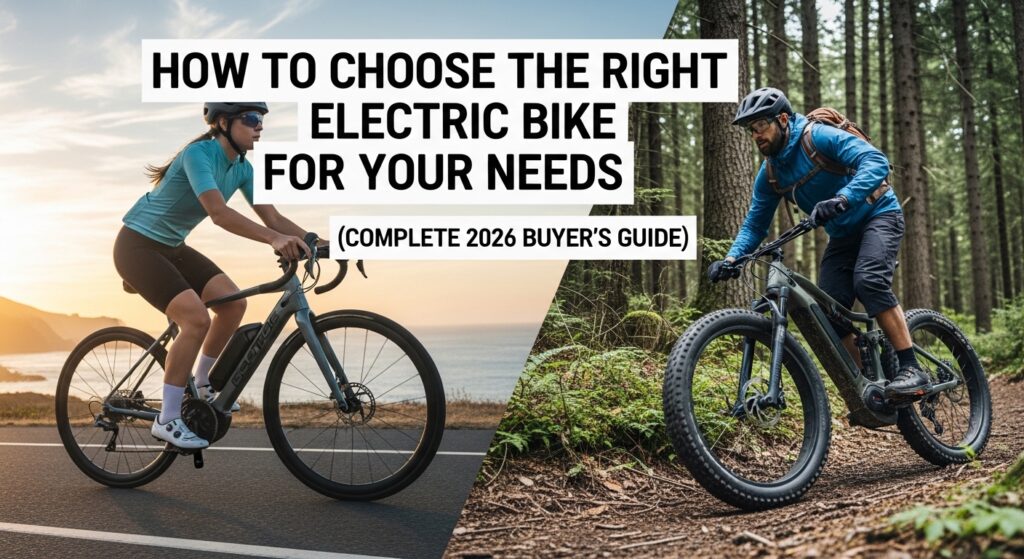
1. Commuter Electric Bikes
Best for daily city rides and work commutes.
Features typically include:
-
Comfortable upright seating
-
Integrated lights
-
Rear racks for storage
-
Moderate motor power (250W–500W)
If your goal is replacing car trips, this is often the best electric bike for beginners.
2. Electric Mountain Bikes (e-MTB)
Designed for trails and rough terrain.
Key features:
-
Strong motors (500W+)
-
Suspension systems
-
Durable frames
-
Higher torque output
These are ideal if you plan to ride off-road regularly.
3. Folding Electric Bikes
Perfect for small apartments and mixed commuting (train + bike).
Advantages:
-
Compact storage
-
Lightweight frame
-
Easy transport
Many first-time buyers search for “best folding electric bike for small apartments” because storage space matters.
4. Fat Tire Electric Bikes
Built for sand, snow, and rough surfaces.
They offer:
-
Wide tires for stability
-
Strong traction
-
Comfortable ride
Great for adventure lovers.
Key Features to Consider Before Buying
Now let’s break down the most important technical aspects in simple terms.
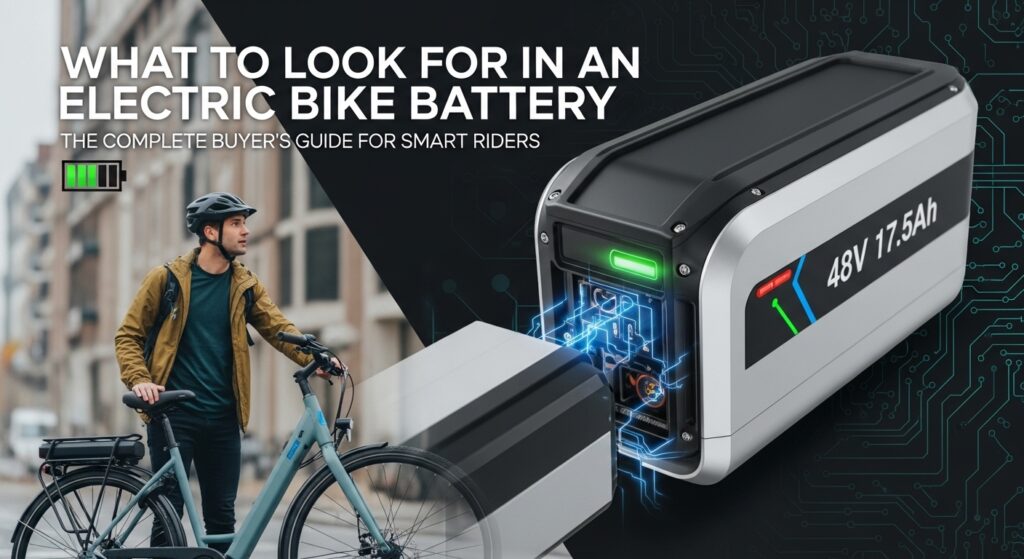
Battery Capacity and Range
Battery range determines how far you can travel on one charge.
-
Measured in watt-hours (Wh)
-
Average range: 25–70 miles
-
Larger battery = longer range
If you’re commuting daily, search for models with at least 400–500Wh.
Many buyers look for “electric bike with long battery range under budget”, which is a smart approach — just make sure range claims are realistic.
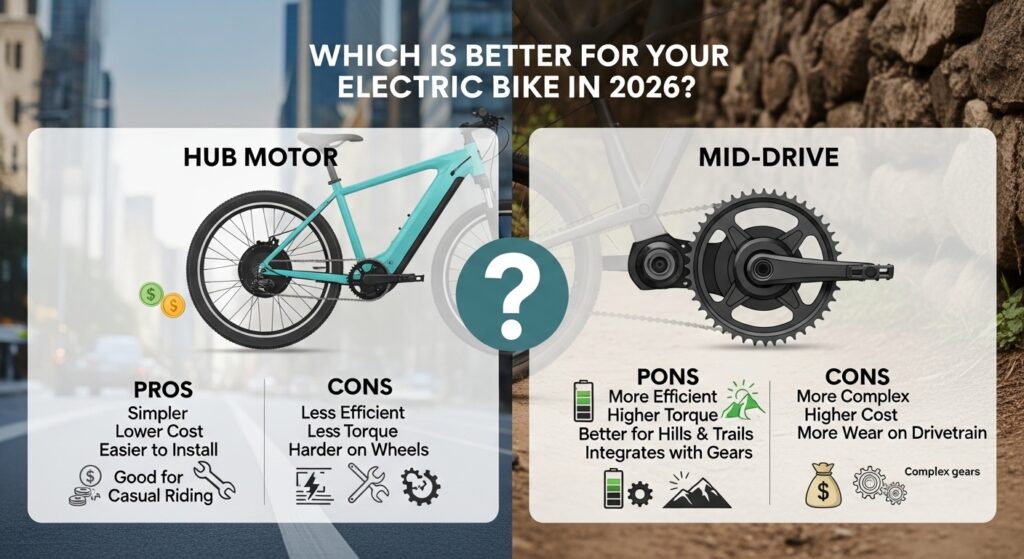
Motor Power and Torque
Motor power is measured in watts (W).
-
250W: Light city riding
-
500W: Balanced power for hills
-
750W: Strong acceleration and climbing
Torque (Nm) affects how well the bike handles hills. Beginners riding in flat cities don’t need extremely high torque.
Pedal Assist vs Throttle
There are two main riding modes:
Pedal Assist (PAS)
-
Motor activates when you pedal
-
Feels natural
-
Better battery efficiency
Throttle Mode
-
Twist or press to move without pedaling
-
Useful in traffic or when tired
For most beginners, a pedal assist electric bike offers the best balance.
Frame Size and Comfort
Comfort matters more than raw speed.
Check:
-
Frame size (based on height)
-
Saddle quality
-
Handlebar position
-
Suspension (if needed)
A test ride, if possible, makes a big difference.
How Much Does a Good Electric Bike Cost in 2026?
Electric bike pricing varies widely.
-
Entry-level models: $800–$1,200
-
Mid-range quality bikes: $1,200–$2,500
-
Premium models: $2,500+
If you’re searching for an “affordable electric bike for beginners”, focus on reliability, battery warranty, and customer reviews rather than just price.
Remember to budget for:
-
Helmet
-
Lock
-
Spare battery (optional)
-
Maintenance
Maintenance and Ownership Costs
Electric bikes are generally low maintenance, but not maintenance-free.
Typical upkeep includes:
-
Brake pad replacement
-
Tire replacement
-
Battery care
-
Chain lubrication
Battery lifespan usually ranges from 3–5 years depending on usage.
To extend battery life:
-
Avoid full discharge regularly
-
Store in moderate temperatures
-
Use the original charger
This helps protect your long-term investment.
Safety Tips for Beginners
Safety should never be overlooked.
Essential tips:
-
Always wear a helmet
-
Use front and rear lights
-
Learn local e-bike regulations
-
Practice in low-traffic areas first
-
Avoid sudden throttle acceleration
Some countries classify electric bikes differently based on speed limits and motor power. Always check local laws before purchasing.
Where to Buy: Online vs Local Bike Shop
Both options have pros and cons.
Buying Online
Pros:
-
Competitive pricing
-
Wider selection
-
Convenient
Cons:
-
No test ride
-
Self-assembly required
Buying from a Local Bike Shop
Pros:
-
Professional setup
-
After-sales support
-
Easy servicing
Cons:
-
Slightly higher cost
If you’re new, local support can be very helpful.
Common Mistakes Beginners Should Avoid
Many first-time buyers rush into decisions. Avoid these mistakes:
-
Buying the cheapest option without checking reviews
-
Ignoring battery warranty
-
Choosing too much power for city riding
-
Overlooking comfort and frame fit
-
Forgetting after-sales service
Take your time. Research properly. Compare carefully.
Is an Electric Bike Worth It in 2026?
For many beginners, the answer is yes.
An electric bike can:
-
Reduce commuting expenses
-
Improve fitness gradually
-
Replace short car trips
-
Provide fun weekend rides
-
Support sustainable living
With smart buying decisions, your e-bike can last years and deliver excellent value.
Final Thoughts: Choose Smart, Ride Happy
Buying your first electric bike doesn’t have to be confusing. Focus on your riding needs, check battery range, choose suitable motor power, and prioritize comfort.
Start with a realistic budget. Compare models carefully. Don’t rush.
If you’re ready to make the switch, take the next step — visit a local shop or shortlist models online. And if you have questions, feel free to share them in the comments. The right electric bike can truly change the way you move every day.
FAQ: Electric Bike Buying Guide for Beginners
1. What is the best motor power for beginners?
For most new riders, a 250W to 500W motor is more than enough for commuting and light hills.
2. How long does an electric bike battery last?
Typically 3 to 5 years, depending on usage and maintenance.
3. Do electric bikes require a license?
In many regions, standard pedal-assist e-bikes do not require a license, but always check local regulations.
4. How far can an electric bike go on one charge?
Most beginner-friendly e-bikes offer 25–70 miles per charge, depending on battery size and riding style.
5. Are electric bikes good for exercise?
Yes. You can adjust pedal assist levels, allowing you to control how much effort you put in while still getting physical activity.