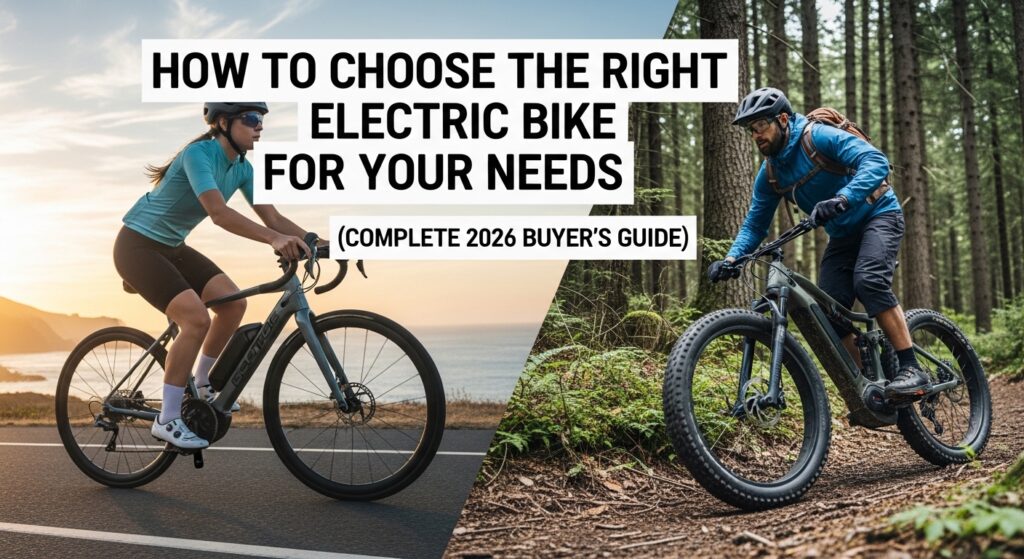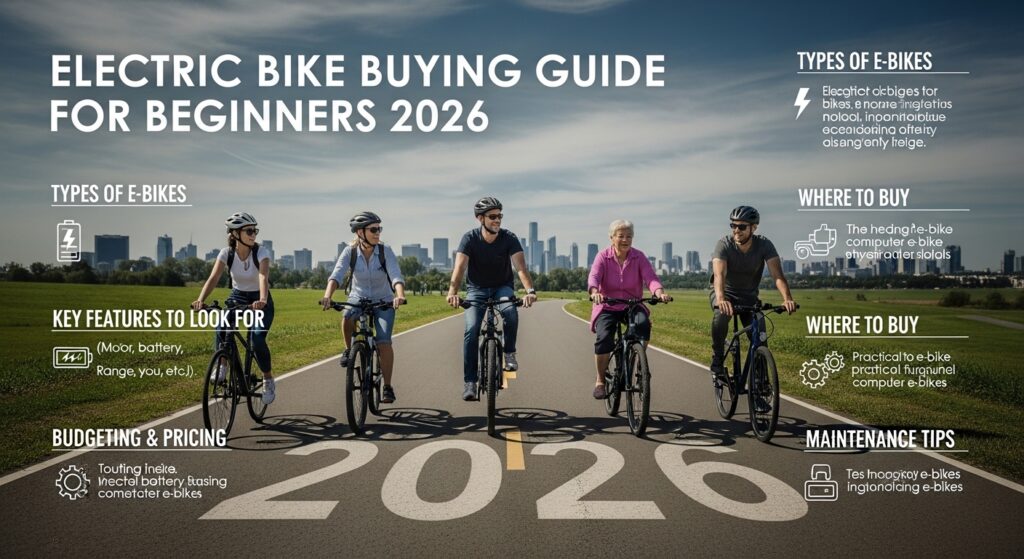
Commuting has changed dramatically over the past few years. Rising fuel costs, traffic congestion, and the need for eco-friendly transportation have pushed many people toward electric bikes as a practical alternative.
But choosing the right electric bike for daily commuting isn’t as simple as picking the most powerful or most expensive model. The best commuter eBike is the one that fits your routine, distance, comfort needs, and budget.

In this guide, we’ll break down exactly what matters — without unnecessary technical jargon — so you can confidently choose the right electric bike for your everyday ride.
Why Electric Bikes Are Ideal for Commuting
Electric bikes combine pedal power with motor assistance, making daily travel:
-
Faster than traditional bicycles
-
More affordable than cars
-
Easier on hills and longer distances
-
Less physically exhausting
For many commuters, an eBike reduces transportation costs while improving flexibility and independence.
Step 1: Know Your Daily Distance
Before looking at specifications, calculate your average daily commute.
-
Under 10 miles round trip → Standard battery is enough
-
10–25 miles round trip → Mid-range battery recommended
-
25+ miles round trip → Consider a high-capacity battery
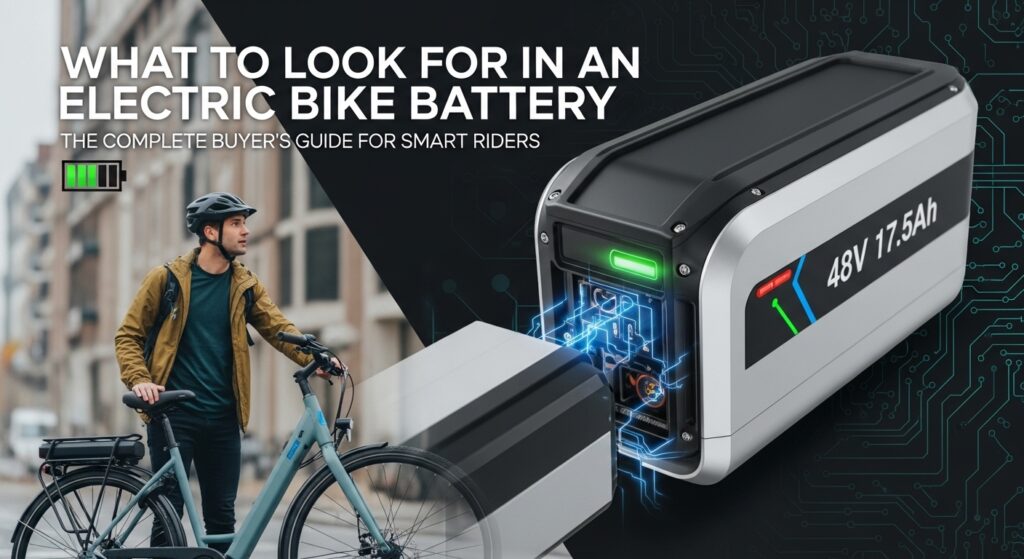
Battery capacity is measured in watt-hours (Wh). For commuting, most riders find 400–600Wh sufficient.
Keep in mind that hills, wind, and assist level can reduce actual range.
Step 2: Choose the Right Motor Type
Two main motor types dominate the commuter market:
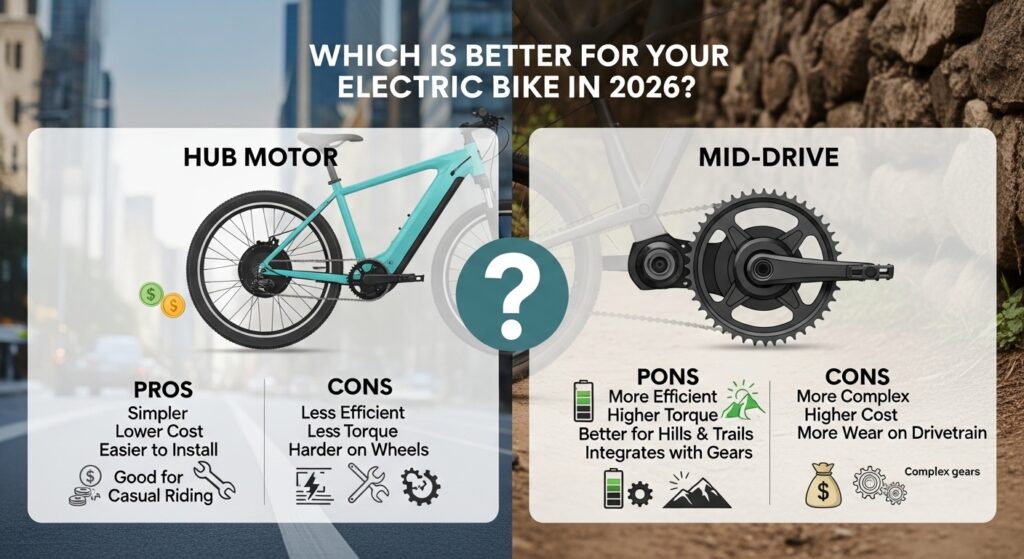
Hub Motor
Located in the wheel (front or rear).
Best for:
-
Flat city roads
-
Budget-friendly options
-
Low maintenance
Hub motors are smooth and simple, making them popular for urban riders.
Mid-Drive Motor
Located near the pedals.
Best for:
-
Hilly cities
-
Long-distance commuters
-
Riders who want a natural pedaling feel
Mid-drive systems are more efficient on hills but typically cost more.
If your commute includes steep inclines, investing in stronger torque will improve comfort and battery efficiency.
Step 3: Battery Capacity & Charging Time
Daily commuters should consider:
-
Charging time (usually 4–6 hours)
-
Removable battery convenience
-
Long-term replacement cost
If you live in an apartment, a removable battery makes indoor charging easier.
Choosing slightly more capacity than your minimum need helps reduce battery strain over time.
Step 4: Frame Style & Comfort
Comfort is critical for daily use.
Step-Through Frame
-
Easy to mount and dismount
-
Ideal for city stops and traffic lights
Step-Over Frame
-
More rigid
-
Slightly sportier feel
Riding Position
For commuting, an upright riding posture is usually more comfortable and safer in traffic. Adjustable handlebars and saddle height are important for long-term ergonomics.
Step 5: Safety Features for City Riding
Urban commuting requires strong safety features.
Look for:
-
Hydraulic or mechanical disc brakes
-
Integrated front and rear lights
-
Reflective tires
-
Bell or horn
-
LCD display with battery indicator
Brake responsiveness is especially important in traffic-heavy environments.
Step 6: Weight & Portability
If you need to carry your bike upstairs or store it in a small space, weight matters.
Most commuter electric bikes weigh between 40–60 lbs (18–27 kg).
Consider:
-
Foldable options
-
Lightweight aluminum frames
-
Quick-release wheels (if applicable)
Step 7: Weather Resistance
Daily commuters ride in various weather conditions.
Look for:
-
Fenders (mudguards)
-
Sealed battery system
-
Rust-resistant components
-
Puncture-resistant tires
Small details like these significantly improve long-term durability.
Step 8: Total Cost of Ownership
When comparing models, don’t focus only on the purchase price.
Consider:
-
Battery lifespan (typically 3–5 years)
-
Warranty coverage
-
Availability of local servicing
-
Replacement parts cost
Sometimes a mid-range model offers better long-term value than the cheapest option.
Step 9: Test Ride Before You Decide
If possible, test ride different models.
During the ride, check:
-
Comfort level
-
Brake response
-
Motor smoothness
-
Stability in turns
-
Ease of handling in traffic
Even a short ride can reveal important differences.
Common Mistakes to Avoid
Many first-time buyers make these errors:
-
Choosing based on maximum speed only
-
Ignoring battery range needs
-
Buying a bike that’s too heavy
-
Overpaying for advanced features they won’t use
Think practicality first — performance second.
Final Thoughts
Choosing the right electric bike for daily commuting is about balance. The ideal commuter model should offer:
-
Reliable battery range
-
Comfortable riding position
-
Strong braking system
-
Durable components
-
Reasonable long-term cost
When you match your electric bike to your daily routine, commuting becomes easier, more affordable, and more enjoyable.
Take your time, compare carefully, and if possible, test ride before making your final decision.
FAQ
What is the best electric bike for city commuting?
A lightweight commuter model with a 400–600Wh battery and reliable disc brakes is ideal for most urban riders.
How far can a commuter electric bike go?
Most commuter eBikes provide between 25–60 miles per charge depending on terrain and assist level.
Is a mid-drive motor necessary for commuting?
Not always. It’s mainly beneficial if your commute includes steep hills.
Are electric bikes safe in traffic?
Yes, when equipped with proper lighting, strong brakes, and reflective components.