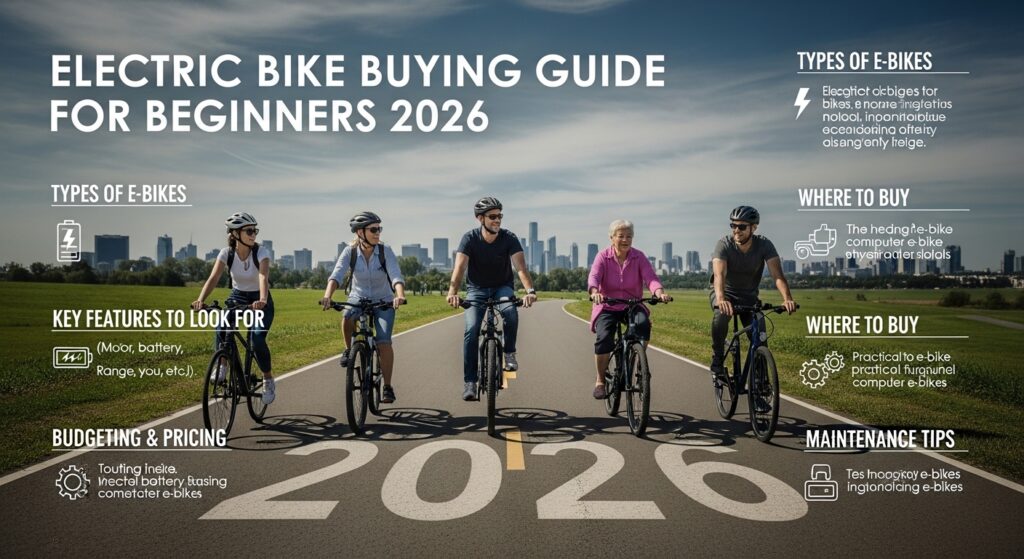
Electric bikes are no longer just a trend — they’re a practical way to commute, exercise, and explore. With hundreds of models in 2026, choosing the right eBike can feel overwhelming.
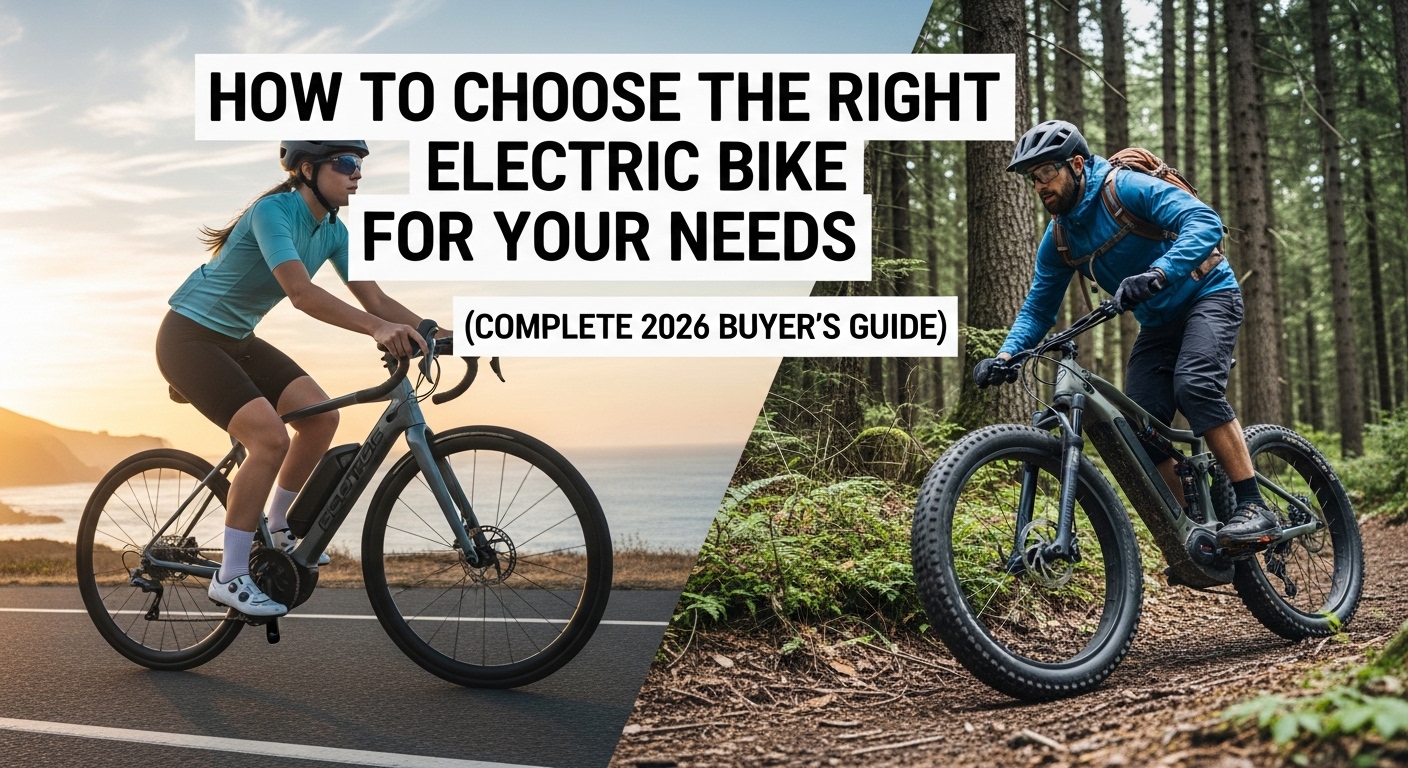
This guide covers everything you need: motor types, battery range, frame comfort, safety features, and long-term costs. By the end, you’ll know exactly which eBike fits your lifestyle, budget, and riding goals.
Why Choosing the Right Electric Bike Matters
Buying an eBike is an investment. A wrong choice can cause:
-
Short battery life
-
Uncomfortable rides
-
High maintenance costs
-
Overspending on unnecessary features
A well-chosen eBike ensures:
-
Efficient commuting
-
Comfortable rides
-
Lower long-term costs
-
Smooth, enjoyable performance
Step 1: Define Your Riding Purpose
Ask: How will I mostly use my eBike?
Daily Commuting
Look for:
-
Lightweight frame
-
Integrated lights
-
Rear rack
-
Puncture-resistant tires
-
Battery 30–60 miles
Off-Road or Trails
Prioritize:
-
Fat or mountain tires
-
Suspension fork or full suspension
-
High-torque mid-drive motor
-
Durable frame
Errands & Cargo
Focus on:
-
Cargo racks
-
High weight capacity (100+ kg)
-
Strong motor (500W+)
-
Stable wheelbase
Step 2: Understand Electric Bike Motor Types
Motor type impacts speed, efficiency, and cost.
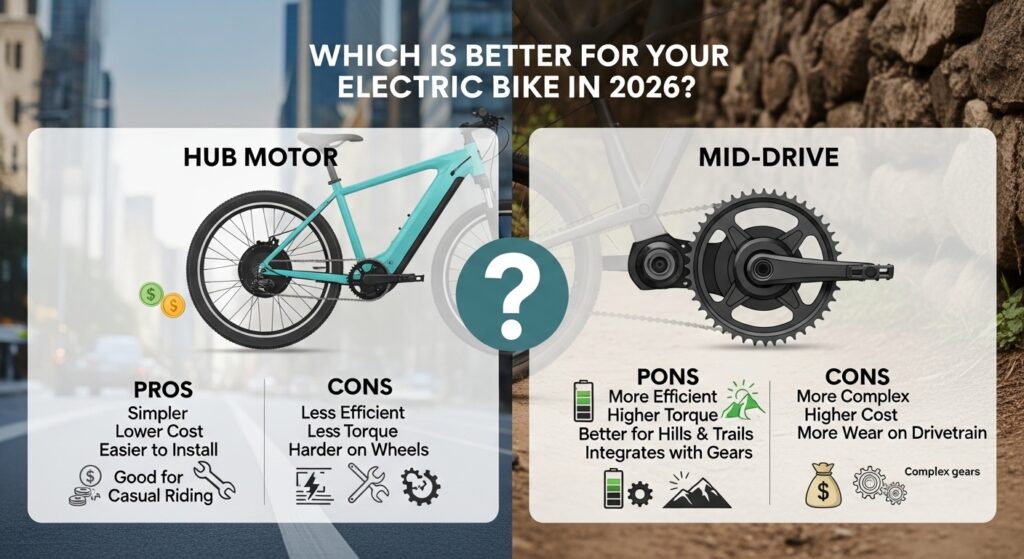
Hub Drive Motor
-
Located in front/rear wheel
-
Affordable, low maintenance
-
Best for city commuting
Mid-Drive Motor
-
Near pedals
-
Efficient on hills
-
Natural pedal feel
-
Higher torque
Tip: Mid-drive motors improve battery efficiency in hilly areas.
Step 3: Choose the Right Battery Size and Range
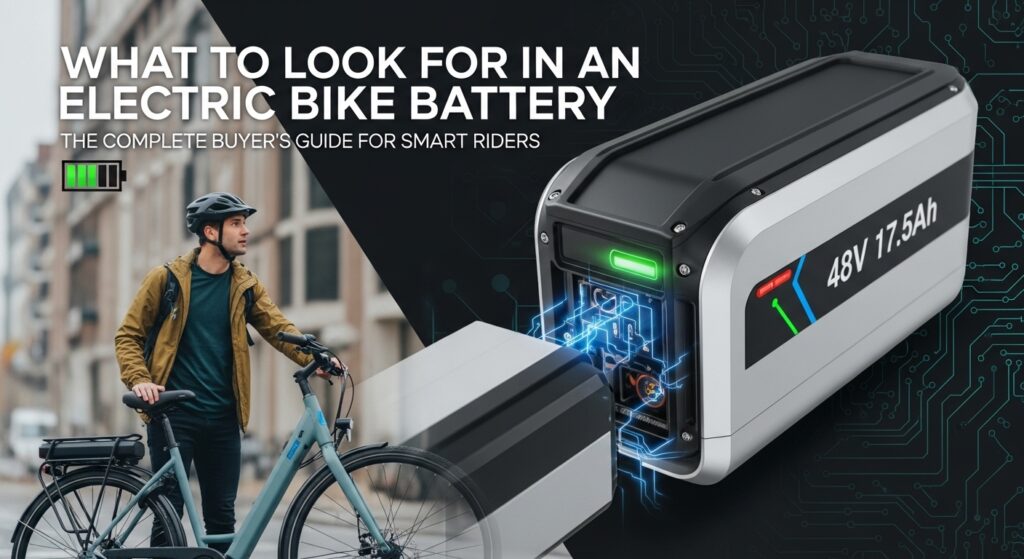
Battery capacity (Wh) affects how far you can ride.
| Battery Size | Range | Ideal Use |
|---|---|---|
| 250–400Wh | 15–35 miles | Short commutes |
| 400–600Wh | 30–60 miles | Daily commuting |
| 600Wh+ | 50–80+ miles | Long rides, off-road |
Factors affecting range: Rider weight, terrain, assist level, weather.
Step 4: Check Frame Style and Comfort
-
Step-through frame: Easy mount/dismount
-
Step-over frame: Traditional, rigid
-
Foldable frame: Ideal for apartments
Riding Position:
-
Upright: Comfortable
-
Forward-leaning: Sporty
-
Adjustable handlebars for long-term comfort
Step 5: Evaluate Electric Bike Costs
Price depends on: Motor, battery, frame, and features.
-
Entry-level: Budget-friendly
-
Mid-range: Balanced performance
-
Premium: Advanced suspension, long-range battery
Extra: Warranty, replacement battery cost, maintenance availability.
Step 6: Safety Features
-
Hydraulic/mechanical disc brakes
-
Integrated LED lighting
-
Reflective tires
-
LCD display
-
Optional: Alarm systems, brake-activated lights
Step 7: Know Local Laws and eBike Classes
-
Class 1: Pedal assist only, limited speed
-
Class 2: Throttle-assisted
-
Class 3: Higher speed pedal assist
Tip: Always check local laws before buying.
Step 8: Maintenance and Warranty
Check:
-
Replacement parts availability
-
Battery warranty (1–2 years)
-
Motor warranty
-
Local service centers
Step 9: Test Ride Before You Buy
Check:
-
Saddle comfort
-
Brakes
-
Motor noise/torque
-
Handling
-
Display readability
Tip: 10–15 minutes test ride reveals more than online research.
Common Mistakes to Avoid
-
Buying based on price only
-
Ignoring battery range needs
-
Overlooking weight or cargo capacity
-
Forgetting local regulations
-
Skipping a test ride
Choosing the right electric bike in 2026 is easy if you focus on:
-
Riding purpose
-
Motor type
-
Battery range
-
Comfort and fit
-
Safety features
-
Long-term costs
Test ride, compare options, and pick a model that matches your lifestyle for better performance, fewer maintenance issues, and more enjoyment.
Call to Action: Share your riding needs in the comments for personalized advice.
FAQ: Choosing the Right Electric Bike
1. What is the best electric bike for beginners?
Lightweight commuter eBike with hub motor and moderate battery range.
2. How far can an electric bike go on one charge?
20–60 miles depending on battery size, terrain, and pedal assist.
3. Is a mid-drive motor better than a hub motor?
Yes for hills and performance; hub motors are easier to maintain.
4. How long does an electric bike battery last?
3–5 years or 500–1,000 charge cycles.
5. Are electric bikes worth the investment?
For commuting, fitness, and eco-friendly transport, eBikes are cost-effective.