Electric bikes have become one of the fastest-growing transportation options worldwide. They provide a convenient way to commute, exercise, and explore the outdoors without relying entirely on a motor vehicle. However, as electric bike popularity continues to rise, governments and transportation authorities have introduced regulations to ensure safety and proper road use.
One of the most important things every rider should understand is eBike classification. Electric bikes are typically divided into three main categories: Class 1, Class 2, and Class 3. Each class has different speed limits, motor functions, and legal restrictions.
Understanding these classes helps riders choose the right electric bike, follow local regulations, and avoid potential fines or riding restrictions.
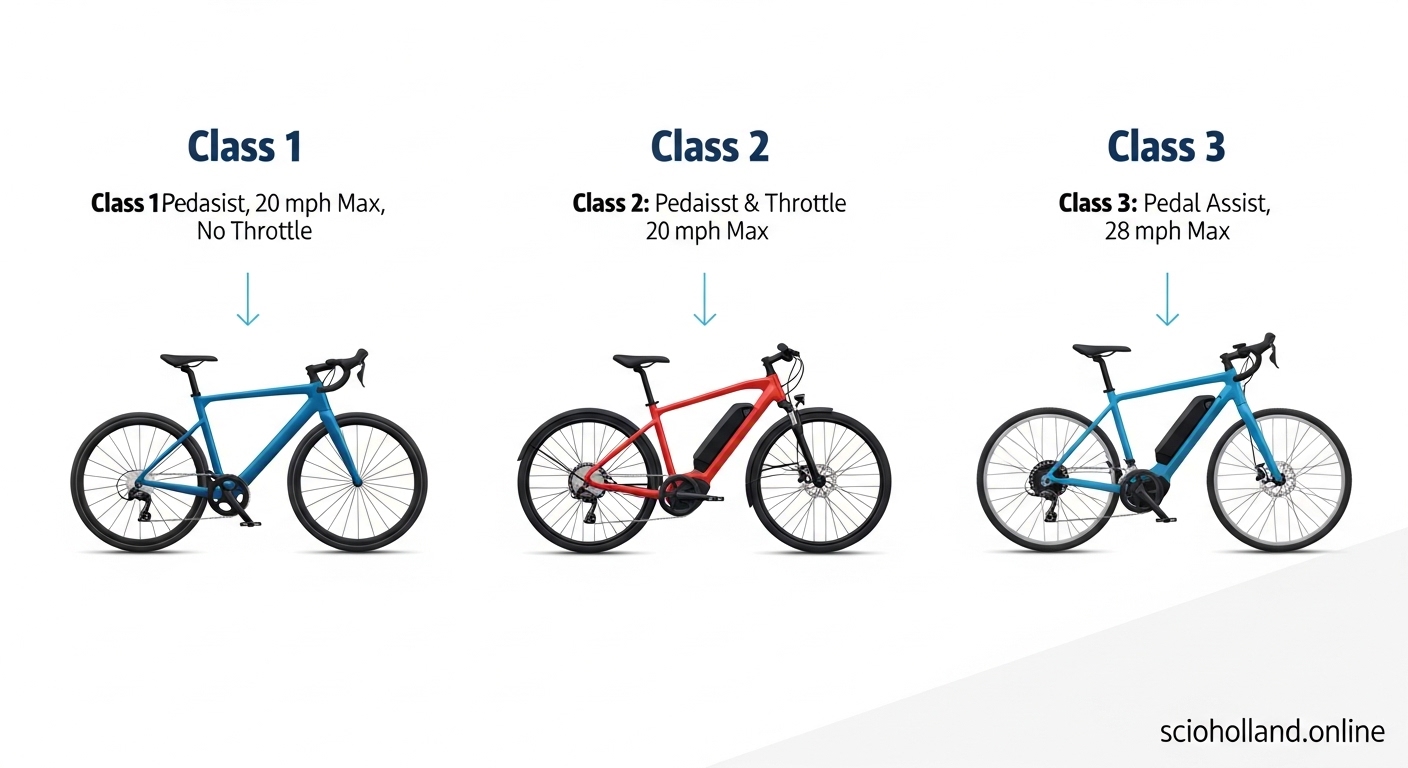
In this guide, we will clearly explain the differences between Class 1, Class 2, and Class 3 electric bikes and help you determine which type best suits your riding needs.
Why eBike Classes Exist
Electric bikes combine traditional cycling with motor assistance, which means they can travel faster than regular bicycles. Because of this, transportation authorities created a classification system to regulate where and how eBikes can be used.
These classifications help determine:
-
Maximum assisted speed
-
Whether a throttle is allowed
-
Where the bike can legally be ridden
-
Helmet requirements in some regions
Although specific laws may vary depending on the country or state, the three-class system is widely used in many parts of the world.
Class 1 Electric Bikes
Class 1 eBikes are the most widely accepted type of electric bike and are often allowed anywhere traditional bicycles are permitted.
Key Features
-
Pedal-assist only (no throttle)
-
Motor assistance activates only while pedaling
-
Maximum assisted speed: 20 mph (32 km/h)
How Class 1 eBikes Work
With a Class 1 electric bike, the motor provides assistance only when the rider is pedaling. Sensors detect pedaling movement and automatically activate the motor to provide additional power.
Once the bike reaches the speed limit, the motor assistance gradually stops.
Advantages of Class 1 eBikes
-
Allowed on most bike paths and trails
-
Provides a natural cycling experience
-
Usually lighter and more efficient
-
Longer battery range compared to higher-power models
Best For
Class 1 electric bikes are ideal for:
-
Daily commuters
-
Recreational riders
-
People who want moderate assistance while still exercising
Because they closely resemble traditional bicycles, they are often the easiest option when it comes to legal access.
Class 2 Electric Bikes
Class 2 eBikes include a throttle feature, which allows the bike to move without pedaling.
Key Features
-
Pedal assist plus throttle option
-
Maximum assisted speed: 20 mph (32 km/h)
How the Throttle Works
The throttle allows riders to accelerate using a button or twist control, similar to a scooter. This means the motor can power the bike even if the rider is not pedaling.
However, the motor will still stop providing assistance once the speed reaches the 20 mph limit.
Advantages of Class 2 eBikes
-
Easier to start from a stop
-
Helpful for riders with limited mobility
-
Convenient in traffic or urban environments
Best For
Class 2 electric bikes are often preferred by:
-
Urban commuters
-
Older riders who want less pedaling effort
-
Riders who need occasional throttle assistance
In some regions, however, throttle-enabled bikes may have limited access to certain trails.
Class 3 Electric Bikes
Class 3 eBikes are designed for higher-speed commuting and performance riding.
Key Features
-
Pedal assist only
-
Higher assisted speed limit: 28 mph (45 km/h)
-
Often equipped with speedometers
Performance Characteristics
Because of their higher speed capabilities, Class 3 electric bikes are often built with stronger components, including:
-
Larger motors
-
Stronger brakes
-
More durable frames
These bikes are typically designed for road use rather than recreational trails.
Advantages of Class 3 eBikes
-
Faster commuting speeds
-
More efficient for long distances
-
Ideal for replacing short car trips
Best For
Class 3 electric bikes are popular among:
-
Long-distance commuters
-
Riders in large cities
-
Experienced cyclists seeking higher performance
However, because of their speed, they may not be allowed on certain bike paths or shared trails.
Comparison of eBike Classes
Here is a simplified overview of the three electric bike classes.
| Feature | Class 1 | Class 2 | Class 3 |
|---|---|---|---|
| Pedal Assist | Yes | Yes | Yes |
| Throttle | No | Yes | Usually No |
| Max Assisted Speed | 20 mph | 20 mph | 28 mph |
| Trail Access | Most trails | Some restrictions | Often restricted |
Understanding these differences makes it easier to choose a model that fits both your riding needs and local regulations.
Which eBike Class Should You Choose?
Choosing the right class depends on how you plan to use your electric bike.
Choose Class 1 If:
-
You want access to bike trails
-
You prefer a natural cycling experience
-
You mainly ride for recreation or commuting
Choose Class 2 If:
-
You want throttle assistance
-
You ride in stop-and-go traffic
-
You want a more relaxed riding experience
Choose Class 3 If:
-
You commute longer distances
-
Speed and efficiency are priorities
-
You mostly ride on roads rather than trails
Important Legal Considerations
Even though the three-class system is widely used, regulations can vary depending on location. Some areas may require:
-
Helmet use for Class 3 riders
-
Minimum rider age
-
Registration or specific equipment
Before purchasing an electric bike, it is always a good idea to check local transportation guidelines to ensure compliance.
Understanding the rules helps riders avoid fines and ensures safer interactions with pedestrians, cyclists, and vehicles.
Conclusion
Electric bikes offer a flexible and efficient way to travel, but understanding their classifications is essential before choosing the right model.
The three main eBike classes each serve different purposes:
-
Class 1 offers a balanced and widely accepted option for most riders.
-
Class 2 provides additional convenience with throttle assistance.
-
Class 3 delivers higher speeds for longer and faster commutes.
By understanding how these classes differ, riders can select an electric bike that matches their lifestyle, riding habits, and local regulations.
Taking the time to learn these distinctions ensures a safer and more enjoyable riding experience.
FAQ
What is the most common eBike class?
Class 1 electric bikes are the most common because they are widely allowed on bike paths and shared trails.
Are Class 3 eBikes legal everywhere?
Not always. Some bike paths and recreational trails restrict Class 3 bikes due to their higher speed limits.
Can you ride a Class 2 eBike without pedaling?
Yes. Class 2 electric bikes include a throttle that allows the motor to power the bike without pedaling.
Which eBike class is best for commuting?
Both Class 2 and Class 3 electric bikes are popular choices for commuting, depending on whether riders prioritize throttle assistance or higher speeds.