The Ultimate Guide: How to Compare Electric Bike Batteries Before You Buy
So, you’re ready to dive into the exciting world of electric bikes, or perhaps you’re looking to upgrade your current ride. That’s fantastic! E-bikes offer an incredible blend of exercise, convenience, and eco-friendly travel. But here’s the thing: while the motor, frame, and brakes are all important, there’s one component that truly defines your e-bike experience, dictates its range, and impacts its overall longevity more than any other: the battery. Think of it as the heart of your electric steed.
Navigating the sea of e-bike battery options can feel daunting. With technical terms like ‘voltage,’ ‘amp-hours,’ ‘watt-hours,’ and ‘lithium-ion’ being thrown around, it’s easy to get overwhelmed. But don’t worry! This comprehensive guide is designed to empower you with the knowledge you need to confidently compare electric bike batteries. By the time you’re done reading, you’ll understand what truly matters, ensuring you make a smart, informed decision that perfectly matches your riding style and needs.
Why Your E-Bike Battery Matters More Than You Think
Before we delve into the nitty-gritty specifications, let’s establish why the battery isn’t just another part; it’s arguably the most critical component of your electric bike. Understanding its importance helps clarify why investing time in comparing options is so worthwhile.
- Range and Freedom: This is often the first thing riders consider. A higher capacity battery means you can travel further on a single charge, opening up longer commutes, more adventurous tours, or simply more time enjoying the ride without ‘range anxiety.’ This directly influences your `e-bike range` capabilities.
- Power and Performance: The battery provides the energy that fuels your motor. Its voltage impacts the `electric bike performance`, influencing how quickly you accelerate, how well your bike tackles hills, and the overall responsiveness of the pedal assist.
- Longevity and Cost of Ownership: A high-quality battery, properly maintained, will last for many years and many charging cycles. A poor-quality or mismatched battery could lead to premature degradation, requiring costly replacements sooner than expected. This touches on `battery longevity` and `e-bike battery lifespan`.
- Weight Distribution: Batteries are heavy. Their placement and weight directly affect your e-bike’s balance and handling. A well-designed battery system contributes to a better `ride experience`.
- Safety: Modern `lithium-ion battery` packs are generally very safe, but cheap, uncertified batteries can pose significant risks. Understanding battery chemistry and safety features is paramount.
Decoding the Core Battery Specifications
When you look at `electric bike battery comparison` charts, you’ll see a few key numbers pop up repeatedly. Let’s break down what each one means and how they relate to your riding experience.
Voltage (V): The Power Behind Your Pedal Assist
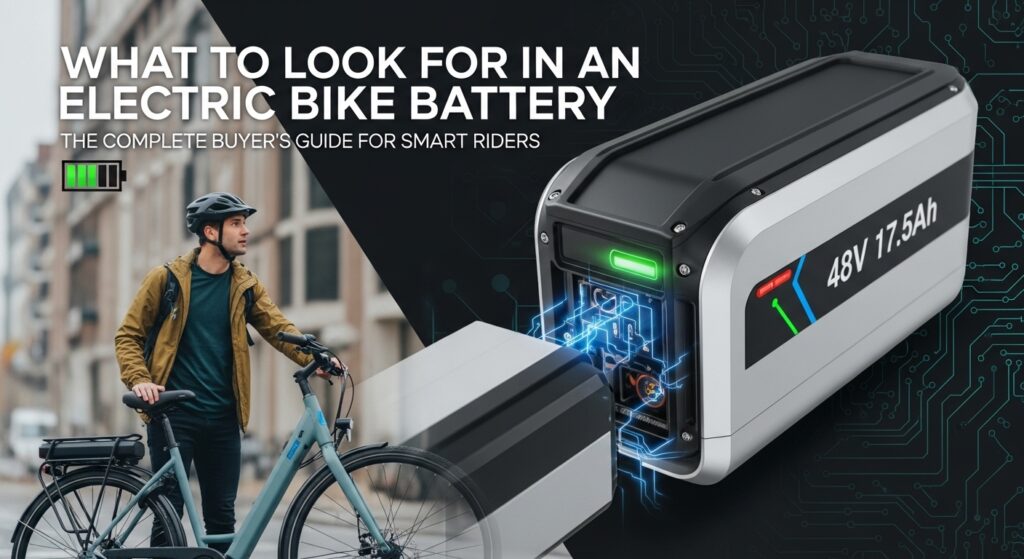
Voltage is often the first specification you’ll notice. It essentially tells you how much ‘push’ the electricity has. For electric bikes, common voltages are 36V, 48V, and 52V. Here’s what they imply:
- 36V: Typically found on entry-level e-bikes or those designed for lighter assistance and flatter terrain. It provides adequate power for most urban commuting and leisure riding.
- 48V: This has become a very popular standard for many mid-range and higher-performance e-bikes. It offers a noticeable boost in `motor power`, better acceleration, and improved hill-climbing capabilities compared to 36V systems.
- 52V: Often associated with more powerful e-bikes, especially those designed for off-road use, cargo hauling, or riders who demand maximum acceleration and torque. A 52V battery, when paired with a compatible motor, can deliver a significantly punchier ride.
Key Takeaway: Higher voltage generally means more power and potentially higher top speeds (within legal limits). However, your motor and controller must be compatible with the battery’s voltage.
Amp-Hours (Ah): Understanding Your E-Bike’s Range Potential
Amp-hours (Ah) measure the `battery capacity` – essentially, how much electrical current the battery can deliver over a certain period. While it gives you an idea of energy storage, it’s not the most accurate single metric for range comparison, especially when comparing batteries of different voltages.
For example, a 36V 10Ah battery stores less total energy than a 48V 10Ah battery. Why? Because the voltage (V) also contributes to the total energy. However, for comparing batteries of the same voltage, Ah is a good indicator of `electric bike range`; a 48V 15Ah battery will generally offer more `mileage` than a 48V 10Ah battery.
Watt-Hours (Wh): The True Measure of Energy Storage
This is arguably the most crucial specification for `electric bike battery comparison` because it represents the `total energy storage` of the battery pack. Watt-hours (Wh) combine both voltage and amp-hours into a single, comprehensive number: Wh = V x Ah.
So, a 36V 15Ah battery has 540 Wh (36 x 15). A 48V 12Ah battery has 576 Wh (48 x 12). Even though the 48V battery has fewer Ah, its higher voltage means it actually stores more total energy. This is why `watt-hour capacity` is the best metric for predicting and comparing the real-world range of different e-bike batteries.
Key Takeaway: When comparing potential range, always look at the `watt-hour (Wh)` rating. A higher Wh rating means more total energy and, generally, a longer range.
Battery Chemistry: Lithium-ion Reigns Supreme (But There Are Nuances)
Almost all modern electric bike batteries are `lithium-ion battery` types, replacing older, heavier, and less efficient lead-acid or NiMH batteries. Lithium-ion offers an excellent balance of energy density (power in a small, light package), cycle life, and low self-discharge.
Within lithium-ion, there are common chemistries, each with slightly different characteristics:
- NMC (Nickel Manganese Cobalt): This is the most common `e-bike battery type`. It offers high energy density, allowing for smaller, lighter packs with good range. Most `long-range e-bike battery` options utilize NMC.
- LFP (Lithium Iron Phosphate): While slightly less energy-dense (meaning a slightly larger or heavier pack for the same Wh), LFP batteries are known for their exceptional safety, thermal stability, and incredibly long `battery lifespan` (often double the charge cycles of NMC). They’re also more tolerant of deep discharges.
Key Takeaway: While NMC is standard, LFP might be a consideration if extreme longevity and safety are your top priorities, and you don’t mind a slightly larger battery pack.
Beyond the Numbers: Practical Battery Comparison Factors
Specifications tell part of the story, but practical considerations are just as important for a satisfactory purchase.
Lifespan and Charging Cycles: Investing in the Long Run
Every `electric bike battery` has a finite number of charge cycles it can endure before its capacity significantly degrades. A ‘cycle’ typically means a full discharge and recharge, but partial charges also count proportionally. Most quality lithium-ion batteries are rated for 500-1000 full charge cycles before dropping to 80% of their original capacity.
Factors influencing lifespan include:
- Depth of Discharge: Regularly draining your battery completely can reduce its lifespan. Partial charges are generally better.
- Temperature: Extreme heat or cold during charging or use can accelerate degradation.
- Storage: Storing a battery fully charged or fully depleted for long periods is detrimental. Aim for around 50-60% charge for long-term storage.
Inquire about the expected `charging cycles` and any tips for prolonging `e-bike battery longevity`.
The Battery Management System (BMS): Your Battery’s Brain
A high-quality `Battery Management System (BMS)` is absolutely crucial. It’s the intelligent circuit board that protects the battery pack from overcharging, over-discharging, over-current, and overheating. It also balances the charge across individual cells within the pack, ensuring all cells degrade evenly. A robust `BMS functionality` enhances `battery safety` and extends lifespan. You won’t see its specs on the label, but a reputable brand will ensure their BMS is top-tier.
Charging Time and Charger Compatibility
How long does it take to fully charge the battery? This depends on the battery’s Wh capacity and the charger’s output current (measured in Amps). A 2A charger will take longer than a 4A fast charger for the same battery. Ensure the charger is specifically designed for your battery’s voltage and chemistry, and always use the manufacturer-recommended charger for optimal safety and battery health.
Weight and Size: Impact on Ride Feel and Portability
While often overlooked, the physical attributes of the battery matter. Heavier batteries can affect your bike’s handling and make it less agile. If you plan to remove your battery for charging or security, its size and weight will impact portability. Integrated batteries offer a sleek look, while external batteries are often easier to remove and replace.
Brand Reputation and Warranty: Peace of Mind for Your Investment
This is where `E-E-A-T` (Experience, Expertise, Authoritativeness, Trustworthiness) really comes into play. Buying a battery from a reputable brand or an `authorized e-bike dealer` is vital. Well-known brands typically use higher quality cells (e.g., Samsung, LG, Panasonic) and have better BMS systems. Check the `e-bike battery warranty`. A good warranty (typically 1-2 years) provides confidence in your investment and covers manufacturing defects.
Where to Buy and What to Look For in a Seller
When purchasing a new e-bike or a replacement battery, always prioritize reputable sources:
- Authorized Dealers: Buying from an `authorized e-bike dealer` ensures you get genuine products, valid warranties, and access to proper service.
- Specialized E-bike Shops: These shops often have knowledgeable staff who can guide you through the `electric bike battery comparison` process and recommend the best fit for your specific e-bike model and riding habits.
- Manufacturer’s Website: Directly from the e-bike manufacturer or a trusted `battery replacement parts` supplier listed on their site is usually a safe bet.
Avoid generic online marketplaces offering suspiciously low prices, as these can sometimes sell counterfeit or low-quality batteries that are unsafe and won’t perform as advertised.
Final Tips for Making Your Decision
Bringing it all together, here’s a checklist to help you choose the best `electric bike battery`:
- Assess Your Needs: How far do you typically ride? Do you commute long distances, or are your rides short leisure trips? Do you encounter many hills? This will help determine the necessary `watt-hour capacity` and voltage.
- Check Compatibility: Ensure any replacement battery is compatible with your e-bike’s motor and controller system. This is non-negotiable for safety and performance.
- Prioritize Wh: Use Watt-hours (Wh) as your primary metric for comparing total energy storage and potential range across different batteries.
- Consider Battery Chemistry: For most, NMC is fine. If you prioritize extreme longevity and safety over minimal size/weight, explore LFP.
- Look for Quality: A good `BMS`, reputable cell brands, and a solid warranty are indicators of a `reliable battery brand`.
- Factor in Your Budget: Higher capacity, higher quality batteries will cost more, but they are an investment in your e-bike’s performance and lifespan.
Conclusion: Power Up Your Ride with Confidence
Choosing the right `electric bike battery` is a pivotal decision that will directly impact your e-bike’s performance, range, and overall enjoyment. By understanding the key specifications like voltage (V), amp-hours (Ah), and especially watt-hours (Wh), along with crucial factors like battery chemistry, lifespan, the indispensable BMS, and brand reputation, you’re now equipped to make an informed choice.
Don’t rush the process; take your time to compare options, consider your specific riding needs, and invest in a quality battery from a reputable seller. A well-chosen battery won’t just power your bike; it will power your adventures, giving you the confidence to explore further and ride longer. Happy riding!
Frequently Asked Questions (FAQ)
Q1: What’s the most important spec for e-bike battery range?
A1: The most important specification for determining an e-bike’s range is its `watt-hour (Wh)` capacity, as it represents the total energy stored in the battery (Voltage x Amp-hours).
Q2: How long do electric bike batteries typically last?
A2: A high-quality `lithium-ion e-bike battery` typically lasts for 500 to 1000 full `charging cycles` or 2 to 5 years, depending on usage, care, and storage conditions, before its capacity noticeably degrades (usually to 80% of original).
Q3: Can I upgrade my e-bike battery to a higher voltage?
A3: Generally, no. Upgrading to a higher voltage (e.g., from 36V to 48V) requires compatibility with your e-bike’s motor and controller, which are designed for a specific voltage range. Mismatched voltages can damage components.
Q4: What’s a good warranty for an e-bike battery?
A4: A good `e-bike battery warranty` typically ranges from 1 to 2 years, covering manufacturing defects. Always check the terms and conditions, as warranties usually don’t cover normal wear and tear or damage from misuse.
Q5: How do I properly care for my e-bike battery to extend its lifespan?
A5: To prolong your `e-bike battery lifespan`, store it at 50-60% charge if not using for extended periods, avoid extreme temperatures (both charging and riding), use only the manufacturer-provided charger, and try to avoid fully depleting the battery often.